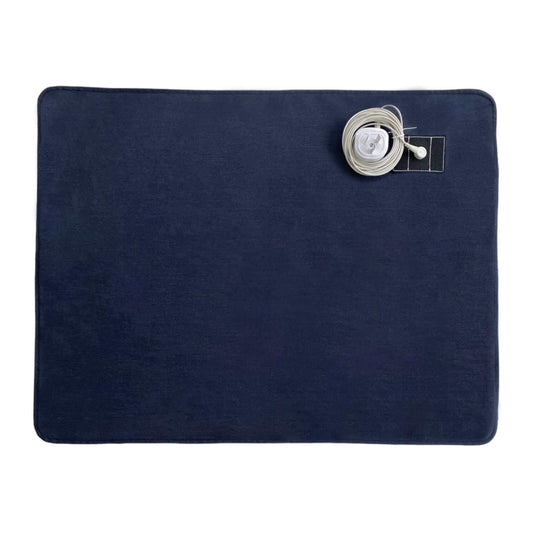
Can You Use A Grounding Sheet With A Cpap Machine

Improve sleep quality, reduce nighttime restlessness, and support calmer breathing by pairing your CPAP therapy with the balancing effects of grounding.

90 day trial grounding mat

90-Day Risk-Free Trial

We are so confident you'll love our products that we offer a 90-Day Risk Free Trial & 3 Year Warranty on grounding sheets.

Frequently Asked Questions

Are grounding mats and sheets safe to use with other devices like CPAP machines?

Safety is a common concern, especially when using grounding products alongside electrical devices such as CPAP machines, adjustable beds, or heated blankets. Grounding mats and sheets are designed to connect you to the grounding (earth) port of a properly wired outlet or to a dedicated ground rod, not to the live power supply. That means they do not “add power” to your body; instead, they create a pathway for excess charge to disperse safely. For most people, this makes them compatible with everyday bedroom electronics, provided the home wiring is up to standard and the product is used as directed. When it comes to CPAP machines, users typically place the grounding sheet or mat on the bed and use their CPAP as normal. If you have any concerns, you can consult an electrician to confirm your outlets are correctly grounded and, for health conditions, talk with your healthcare provider. Premium Grounding products are purpose‑built for bedroom use and are tested for conductivity and safety, giving you confidence to integrate them into your existing sleep setup.

Can a grounding sheet improve my sleep if I already use a CPAP machine?

Many people using CPAP still wake feeling unrefreshed, wired, or tense, even when their apnea is well controlled. A grounding sheet does something different from your CPAP: instead of opening the airway, it helps calm your nervous system by reconnecting your body to the earth’s natural electrical charge while you sleep. This may support deeper relaxation, smoother heart‑rate variability, and a more “settled” feeling in the body, which can translate into easier sleep onset and fewer night‑time awakenings. While evidence is still emerging and results vary, many users report that combining CPAP with grounding helps them wake feeling more rested, with less morning stiffness or grogginess. Grounding is not a replacement for CPAP or medical treatment for sleep apnea; rather, it is a simple, passive add‑on that works in the background while your CPAP handles your breathing. If you often feel tired despite good CPAP compliance, a grounding sheet offers a low‑effort way to support the quality of your sleep, not just the quantity of hours in bed.

How should I set up my grounding sheet when I sleep with a CPAP?

The goal is to keep your CPAP therapy unchanged and layer grounding underneath it. First, connect your grounding sheet to a properly grounded outlet using the supplied cord, or to an approved grounding rod if that is part of your setup. Then place the sheet on the mattress and cover it with a thin natural-fibre fitted sheet, or sleep directly on it if you prefer. Position your CPAP machine as you normally would on a bedside table, keeping the device and power cord off the grounding sheet to avoid unnecessary wear or moisture exposure. Make sure the grounding cord runs away from walkways and cannot be tripped over. If you use a heated hose or humidifier, there is no need to change your routine; simply ensure that any water spills are cleaned promptly and that the CPAP unit itself stays dry. This setup lets the CPAP manage your airway while the grounding sheet works passively to support relaxation and overnight recovery.

Will a grounding sheet interfere with my CPAP machine or sleep data?

A common worry is that adding anything new to your sleep setup will disrupt CPAP performance or tracking. When installed correctly, a grounding sheet connects only to the earth pin of a grounded outlet, not to the live or neutral power lines, so it does not “feed electricity” into your CPAP. In most modern bedrooms, the two systems operate independently: your CPAP draws power through its plug, while the grounding sheet simply provides a path for excess charge to dissipate. Some very sensitive electronics or poorly wired outlets could in theory experience interference, which is why it is important that your home wiring is up to standard and that you follow all instructions. If you use an app, cloud platform, or wearable like a smartwatch to track your sleep, you should not see any difference in connectivity. If you ever notice unusual CPAP behaviour—error messages, noises, or heat—disconnect the grounding sheet temporarily, follow the CPAP manufacturer’s safety guidelines, and consult your equipment provider or clinician before resuming combined use.

Can grounding replace my CPAP machine if my sleep improves?

No. A grounding sheet cannot replace your CPAP machine or any medically prescribed treatment for sleep apnea. CPAP’s role is to mechanically keep your airway open with gentle air pressure so that oxygen flow stays stable all night; stopping it without medical guidance can quickly bring back apneas, snoring, and oxygen drops, even if you feel you are sleeping “better.” Grounding, by contrast, is focused on supporting relaxation, circulation, and recovery by connecting your body to the earth’s electrical field. Some people notice that when they add grounding, they feel calmer, less inflamed, and more rested—but their underlying sleep apnea still requires CPAP to control airway obstruction. If you experience meaningful improvements after starting grounding, that is a bonus for your overall wellbeing, but it does not mean your apnea has resolved. Any change to pressure settings, mask type, or therapy plan must go through your sleep specialist. Think of the grounding sheet as a supportive layer that works alongside CPAP, not a substitute for it.

See all FAQs

For more information, visit our FAQ page: https://premiumgrounding.au/a/faq